How to Choose the Perfect Leather Jacket
A high-quality leather jacket is the ultimate wardrobe investment. It is a rare piece of clothing that looks just as good with a plain white t-shirt and jeans as it does draped over a slip dress or layered with a hoodie. Because a good one can last for decades, finding the right one requires looking past the price tag to evaluate the fit, style, and material.
Here is exactly how to choose a leather jacket that you will love wearing for years to come.
1. Pick Your Iconic Style
Leather jackets are not one-size-fits-all in terms of vibe. The silhouette you choose will define how you wear it.
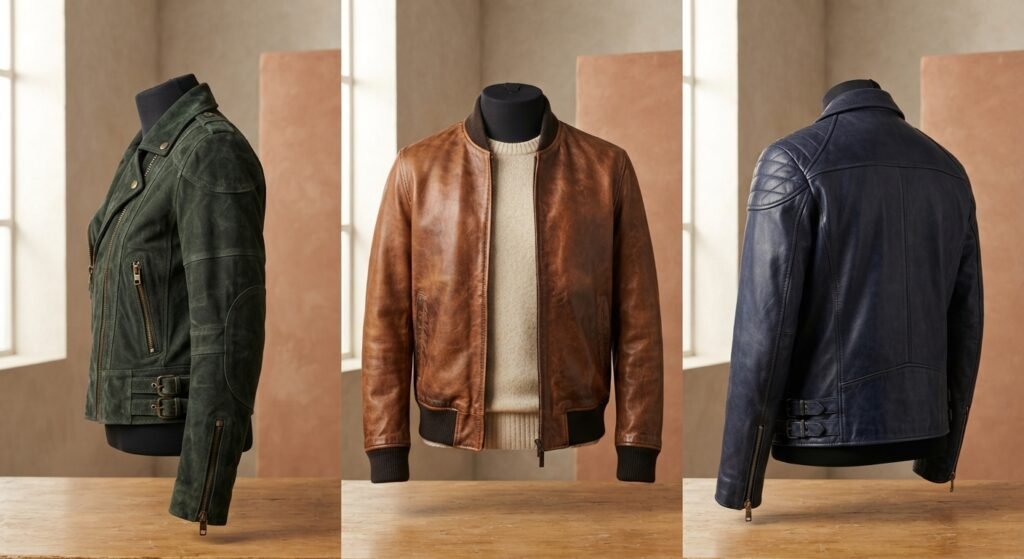
- The Biker (Double Rider): Characterized by asymmetrical zippers, wide lapels, and flared collars with snaps. Originally designed for motorcyclists, this style is inherently edgy and rebellious.
- The Bomber (Flight Jacket): Features a cropped, rounded silhouette with ribbed cuffs and a ribbed waistband. It offers a sporty, casual, and slightly retro aesthetic that looks effortlessly cool.
- The Racer (Café Racer): A minimalist, streamlined jacket with a small snap-collar and a straight center zipper. It is sleek, understated, and the easiest style to dress up for a business-casual environment.
- The Field Jacket / Utility: A longer cut that usually features a belted waist and multiple front pockets. It provides a rugged, outdoorsy appearance with plenty of utility.
2. Understand the Leather Types
The type of animal hide used impacts how the jacket feels, how heavy it is, and how it ages over time.
- Lambskin / Sheepskin: Incredibly soft, lightweight, and supple from the very first wear. It offers a luxury feel and drapes beautifully, though it is more delicate and prone to tearing than heavier hides.
- Cowhide: The traditional choice for classic jackets. It is highly durable, heavy, and naturally resistant to wind and water. It starts out quite stiff and requires a “break-in” period, but it becomes incredibly comfortable over the years.
- Goatskin: A fantastic middle ground. It is softer and lighter than cowhide but significantly tougher and more water-resistant than lambskin. It features a distinct pebble-grain texture.
- Suede: Leather that has been brushed to create a soft, velvety nap. It looks exceptionally rich and sophisticated, but it requires extra maintenance because it absorbs water and stains easily.
3. Check the Leather Quality Grades
When reading product descriptions, pay close attention to how the leather is processed.
- Full-Grain Leather: The gold standard. It uses the entire thickness of the hide, retaining all natural grain and imperfections. It is exceptionally tough and develops a beautiful, unique patina as it ages.
- Top-Grain Leather: The most common grade for premium jackets. The very top layer of the hide is sanded down to remove imperfections, making it thinner, more pliable, and uniform in color.
- Genuine Bonded Leather: A misleading name. This is made from leftover scraps of leather glued together with polyurethane. It is cheap, does not breathe well, and will crack or peel within a few years. Avoid this if you want a lifetime piece.
4. Prioritize Fit Over Everything Else
A leather jacket should feel like a second skin. Keep these fitting rules in mind when trying one on:
- The Shoulders: The shoulder seams should align perfectly with the edge of your natural shoulders. If the seams droop down your arm, the jacket is too big; if they pull toward your neck, it is too small.
- The Sleeves: The cuffs should hit right at your wrist bone when your arms are down. If they hit the middle of your palm, they are too long.
- The Layering Test: Hug yourself when wearing the jacket. It should feel snug, but you should still be able to move your arms freely. If you plan to wear thick sweaters underneath, try the jacket on over a sweater to ensure you have enough room.
5. Inspect the Details and Hardware
High-quality construction is found in the details. Before you buy, check the finishing touches:
- Zippers: Look for sturdy, smooth-gliding metal zippers (like YKK or Riri). Avoid plastic zippers, which break easily and look cheap.
- Linings: A good jacket usually features a breathable lining like cotton or rayon in the body, and smooth polyester or silk in the sleeves so your arms slide in effortlessly.
- Stitching: Inspect the seams. The stitching should be straight, dense, and free of loose threads. Double-stitching along the edges indicates a jacket built to handle stress.
Final Thoughts: The Cost vs. Value
A genuine, high-quality leather jacket is an investment, often costing anywhere from $300 to over $1,000. However, when you calculate the cost-per-wear over ten, twenty, or thirty years, it quickly becomes one of the most cost-effective items in your closet. Choose a timeless style, prioritize full or top-grain leather, and ensure the fit is immaculate.